Artist Kunstmagazin
Ausgabe Nr. 67, 2006: Artist
Pages
Jean Guillaume Ferrée
von Henry Pierre Bertin
Das erste Mal begegnete ich Jean Guillaume Ferrée 1962 bei einer
Ausstellungseröffnung von Gérard Deschamps in der Galerie Ursula
Giradon in Paris. Danach wir trafen uns auch auf zahlreichen anderen
Ausstellungen in Paris und Straßburg wieder. Als ich ihn 1963 in
Lorquin besuchte, erkannte er mich nicht und schickte mich fort. Ein
paar Monate später begegneten wir uns erneut und Ferrée begrüßte
mich als wäre nichts geschehen – von meinem Besuch wusste er
nichts. Ähnliche Situationen wurden mir daraufhin von anderen
Künstlern, die mit ihm in Kontakt standen, geschildert. Ich tat es als
exzentrische Manier ab und erfuhr erst viele Jahre später, dass es
sich bei diesem Verhalten um die Auswirkungen seiner Erkrankung
handelte. Dr. Philippe Gerrault, der behandelnde Arzt im Centre
Hospitalier Spécialisé - Lorquin, den ich nach Ferrées Tod 1974
kennen lernte, erklärte Ferrées Krankheitsbild in einem Bericht für
eine neurologische Fachzeitschrift: „Jean Guillaume Ferrée litt unter
der sehr seltenen neurologischen Erkrankung, der retrograden
temporären Agnosie. Diese Erkrankung tritt in unkontrollierbaren
Schüben auf. Ein retrograder Schub äußert sich dadurch, dass der
Patient die Fähigkeit der zeitlichen Orientierung verliert. Wie bei einer
„Zeitreise“ wird der Patient in eine zurückliegende Zeit versetzt, die
dann für ihn die reale Gegenwart darstellt. Dieser Zeitraum kann in
der Regel mehrere Jahre betragen. Als ich Jean Guillaume Ferrée
1967 das erste Mal als Patient behandelte, war er der festen
Überzeugung, das wir das Jahr 1958 hätten. Dieser Zustand hielt
mehrere Monate an und löste sich genauso überraschend wie er
begonnen hatte. Interessanterweise fehlte ihm danach die Erinnerung
an den Klinikaufenthalt – selbst ich war ihm unbekannt. In dem von
mir behandelten Zeitraum traten diese Zustände in unregelmäßigen
zeitlichen Abständen auf und beeinträchtigten sein gesamtes Leben.
Zurück blieb das beunruhigende Gefühl, wann dieser Zustand das
nächste Mal eintreten würde.“
Louis Bunuel schrieb in seinen Memoiren: „Ein Leben ohne
Gedächtnis wäre kein Leben ... Ohne Gedächtnis sind wir nichts“.
Man könnte dieses Zitat als Leitgedanken für das Leben von Jean
Guillaume Ferrée sehen. Das Bewusstsein für den finalen
Erinnerungsverlust begleitete ihn sein Leben lang und führte
wahrscheinlich 1974 zu seinem Tode.
Ferrée redete von sich nicht als Künstler und er wurde auch Zeit
seines Lebens nicht ausgestellt. 1972 verfügte er in seinem
Testament dass seine Arbeiten für 30 Jahre unter Verschluss gehalten
werden. Erst 2005 wurden seine in Deutschland hinterlassenen
Arbeiten für das Musée Ferrée temporairement in Heiligenrode bei
Bremen, dem Ort wo die Arbeiten die Jahre über bei deutschen
Verwandten gelagert waren, zur Verfügung gestellt. In dem Werk Jean
Guillaume Ferrées finden sich Collagen aus Zeitungsausschnitten, die
an Hannah Höch (Schnitt mit dem Küchenmesser, 1919), oder Raoul
Hausmann (Kopf, 1923) erinnern. Seine Assemblagen, Objekte,
Performances und Fotografien bewegen sich im Kreis von Dada,
Nouveau Réalisme, l´Art Brut und Fluxus. „Manifestierte
Erinnerungen“ nannte er seine Arbeiten, die man nur schwer aus dem
Kontext seiner Krankheit lösen kann. Der Kopf spielt dabei in
doppelter Hinsicht eine übergeordnete Rolle und wurde in vielen
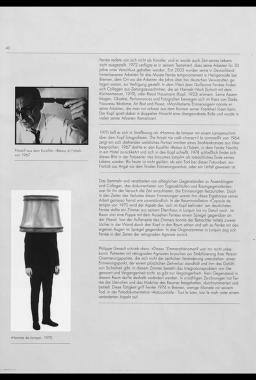
seiner Arbeiten thematisiert. 1970 ließ er sich in Straßbourg als
Homme de lamp mit einem Lampenschirm über dem Kopf
fotografieren. Die Arbeit Le café chasse-t-il le sommeil? von 1964
zeigt ein sich drehendes weibliches Portrait inmitten eines
Strahlenkranzes aus Werbesprüchen. 1967 drehte er den Kurzfilm
Retour à l´hôtel, in dem Ferrée Nachts in ein Hotel zurückkehrt und
sich in den Kopf schießt. 1974 schließlich findet sich dieses Bild in der
Fotoserie: les lancumes lamplir als tatsächliches Ende seines Lebens
wieder. Bis heute ist nicht geklärt, ob sein Tod bei dieser Fotoarbeit,
ein Freitod aus Angst vor den finalen Erinnerungsverlust, oder ein
Unfall gewesen ist.
Das Sammeln und verarbeiten von alltäglichen Gegenständen zu
Assemblagen und Collagen, das dokumentieren von Tagesabläufen
und Raumgegenständen war für ihn der Versuch die Zeit einzufrieren,
die Erinnerungen festzuhalten. Doch in den Zeiten des Verlustes
dieser Erinnerungen waren ihm diese Ergebnisse seiner Arbeit
genauso fremd wie unverständlich.
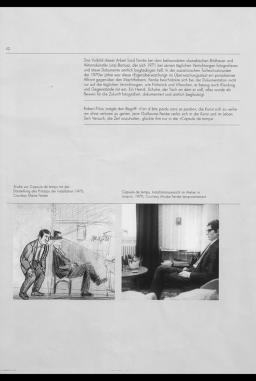
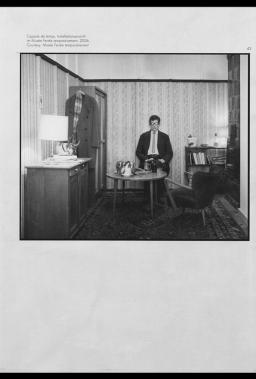
In der Rauminstallation Capsule de temp von 1970 wird der Aspekt
des `sich im Kopf befinden´ am deutlichsten. Ferrée stellte ein Zimmer
aus seinem Elternhaus in Lorquin bis ins Detail nach. Im Raum sitzt
eine Puppe mit dem Aussehen Ferrées einem Spiegel gegenüber an
der Wand. Von der Außenseite des Zimmers konnte der Betrachter
mittels zwei Löcher in der Wand durch den Kopf in den Raum sehen
und sah so Ferrée mit den eigenen Augen im Spiegel gegenüber. In
das Originalzimmer in Lorquin zog sich Ferrée in den Zeiten der
retrograden Agnosie zurück. Philipe Gerault schrieb dazu: „Dieses
`Zimmerphänomen´ war mir nicht unbekannt. Patienten mit
retrograden Agnosien brauchen zur Stabilisierung ihrer Person
Orientierungspunkte, die sich nicht der zeitlichen Veränderung
unterziehen: einen Erinnerungspunkt, der einem plötzlichen
Zeitverlust standhält und ihm das Gefühl von Sicherheit gibt. In
diesem Zimmer besteht das Integrationsproblem von Gegenwart und
Vergangenheit nicht, es gibt nur Vergangenheit.“ Kein Gegenstand in
diesem Raum durfte deshalb verändert werden. In unzähligen
Zeichnungen hat Ferrée die Utensilien und das Mobiliar des Raumes
festgehalten, durchnummeriert und betitelt. Diese Tätigkeit griff Ferrée
1974 in Bremen, wenige Monate vor seinem Tod, in der
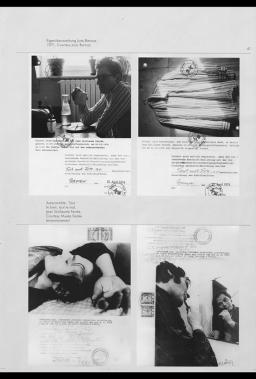
Fotodokumentation Autocontrôle - Tout le bien, tout le mal unter
einem veränderten Aspekt auf.
Das Vorbild dieser Arbeit fand Ferrée bei dem befreundetem
slowakischen Bildhauer und Aktionskünstler Juraj Bartusz, der sich
1971 bei seinen täglichen Verrichtungen fotografieren und diese
Dokumente amtlich beglaubigen ließ. In der sozialistischen
Tschechoslowakei der 1970er Jahre war diese „Eigenüberwachung“
im Überwachungsstaat ein provokativer Affront gegenüber den
Machthabern. Ferrée beschränkte sich bei der Dokumentation nicht
nur auf die täglichen Verrichtungen, wie Frühstück und Waschen, er
bezog auch Kleidung und Gegenstände mit ein. Ein Hemd, Schuhe,
der Tisch an dem er saß, alles wurde als Beweis für die Zukunft
fotografiert, dokumentiert und amtlich beglaubigt.
Robert Filiou prägte den Begriff: l´art d`être perdu sans se perdre, die
Kunst sich zu verlieren ohne verloren zu gehen. Jean Guillaume
Ferrée verlor sich in der Kunst und im Leben. Sein Versuch,
die Zeit anzuhalten glückte ihm nur in der Capsule de temps.
© dirkdietrichhennig.com 2024